“I remember you was conflicted,
Misusing your influence,
Sometimes I did the same,
Abusing my power, full of resentment,
Resentment that turned into a deep depression,
Found myself screaming in a hotel room…” – Kendrick Lamar
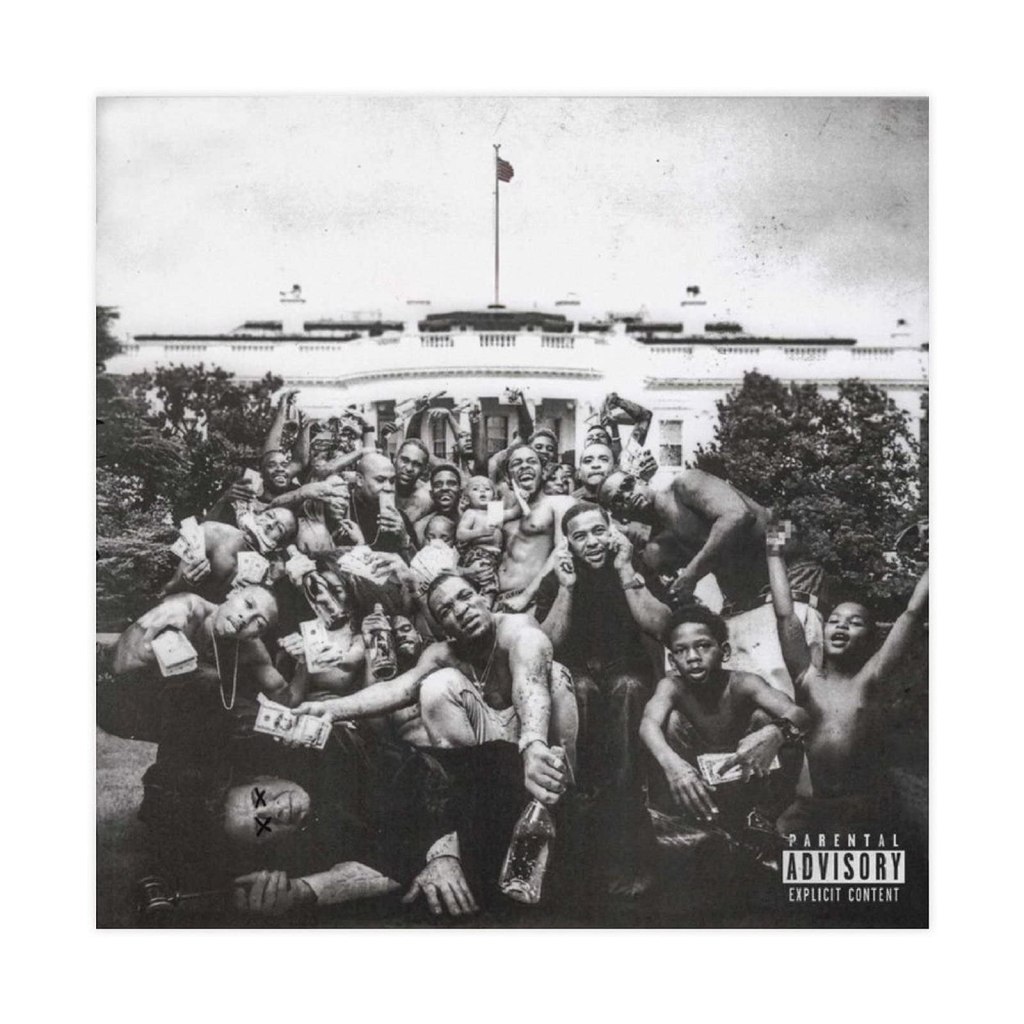
As a 19-year-old hip-hop head and music student enmeshed in Leeds’ thriving neo-Jazz scene it was only a matter of time before To Pimp a Butterfly found its way to my ears. I was living independently for the first time, flown 300 miles from my rural Devonshire nest and running along the Leeds/Liverpool canal when Compton raised Kendrick Lamar’s masterpiece made its mark on me. In fact, there were many marks. The drunken J-Dilla-esk rhythms of ‘Institutionalized’. The unsettling panning as ‘u’ switches from a rage-filled tirade to a broken teary hotel room introspection. The disturbing atonal cries opening ‘These Walls’ inflicting a tension in me that I found relieved seconds later by a smooth and rich harmonic journey. All of which imbued me with the immediate sense that I was witnessing something profound.
The musicianship in To Pimp a Butterfly is astounding. Kendrick’s intentional use of a variety of unpredictable tones, personas and cadences in his vocal performances leave you questioning if that’s still even Kendrick!? And of course, the words themselves attest to a command of flow and literary flair that’s second to none. “Flow’s so sick, don’t you swallow it, Bitin’ my style, you’re salmonella poison positive.” Genius. Perhaps the greatest musical strength of this project comes from its collaborations with jazz virtuosos Robert Glasper, Kamasi Washington and Lalah Hathaway to name a few. The artistic direction of Kendrick in melding Jazz and Hip-Hop has resulted in nothing short of a musical evolution. Throughout, one finds searing horn lines, complex jazz harmony and innovative developments within songs that break out of traditional verse-chorus forms. How often do you hear someone collapse the boundaries between rap and scat as they spit over a traditional uptempo swing? Look no further than K-dot on ‘For Free’.
The political dimensions of the record deserve attention when it comes to race and politics in the context of modern America. References to ‘Forty Acres and a Mule’, the empty promise of union general William Tecumseh Sherman to ex-slaves in 1865 and to Alex Haley’s 1976 novel Roots emphasise the significance of memories and legacies of slavery to Kendrick and in modern America more generally, ‘Oh America, you bad b***h, I picked cotton and made you rich’. It’s not surprising that ‘Alright’ became an anthem of BLM protests from Sandra Bland to George Floyd. Kendrick here joins a rich tradition of African American musicians like Sam Cooke and Marvin Gaye who’s musical expression has served the civil rights struggle. There are however controversial aspects of Kendrick’s messages on race from his connection of the N-word to the Ethiopian kingly title ‘Negus’ elucidated in ‘I’ to his indulgence of bootstrapism in ‘blacker the berry’. Jamaican writer Marlon James speaks on his year long struggle with the record highlighting that Kendrick’s comparison of the Zulu and Xhosa wars with so-called ‘black-on-black’ gang violence doesn’t stand up to scrutiny, ‘nobody says France and England in the Battle of Waterloo is like gangsters’. Ultimately James lauds Kendrick and comes to realise it’s one of Kendricks most personal songs. He’s speaking to himself rather than judging the wider black community, a point Kendrick has clarified himself.
This is not to say however that the album can be reduced to categories of ‘conscious rap’ or ‘protest music’. To Pimp a Butterfly has a depth these labels don’t do justice to. Listening to Pimp you can’t move for soul-searching, existential exploration and emotive expression, particularly in the perpetually building poem ‘I remember you was conflicted’ weaved throughout the album.
As we drift to the end of ‘Mortal Man’ and Kendrick’s conversation with the ghost of Tupac the metaphor of the Butterfly is resolved. The tension running through the whole album stands between how Kendrick’s art and talent (his inner butterfly) is both a means of self-preservation from the harsh environment of the streets yet also a means of being exploited, “One thing it noticed is how much the world shuns him but praises the butterfly.” The internal struggle is eventually resolved as Kendrick takes his evolved perspective back to the streets; reconciling the authenticity and unity of every aspect of himself. His talents, his experiences of beauty and violence, his roots, all one… “Although the butterfly and caterpillar are completely different, they are one and the same.”
Pianist Robert Glasper put it best when he spoke on the appeal of the record ‘he speaks to everybody, to the gangsters and the backpackers’; it even had a direct influence on David Bowie’s Blackstar. Kendrick broke the mould in 2015 with To Pimp a Butterfly. Kung Fu Kenny’s gift marks an evolution of the genre that only matures like a fine wine the longer you listen. Go. Listen. And then… listen again.
Further listening
- Diaspora (2017) – Christian Scott aTunde AdjuahSundial
- Sundial (2023) – Noname
- Flower Boy (2017) – Tyler the Creator
- Black on Both Sides (1999) – Mos Def
Further reading
- The New Jim Crow: Mass Incarceration in the Age of Colourblindness (2010) – Michelle Alexander
- Creating Black Americans: African-American History and Its Meanings, 1619 to the Present (2006) – Nell Irvin Painter
 WallerWrites - History, Music, Politics & Culture
Leave a comment