“I sometimes imagine asking the people who speak for our community a series of questions: How many Palestinians would Israel have to kill in Gaza before you urged the United States to stop sending it weapons? How many Palestinian prisoners would Israel have to torture and sexually abuse with impunity before you acknowledged the right of international courts to put Israeli leaders on trial? How long must West Bank Palestinians live under military law before you stop calling Israel a democracy? How many human rights groups have to accuse it of apartheid before you question the principle that Jews alone must rule?” – Peter Beinart
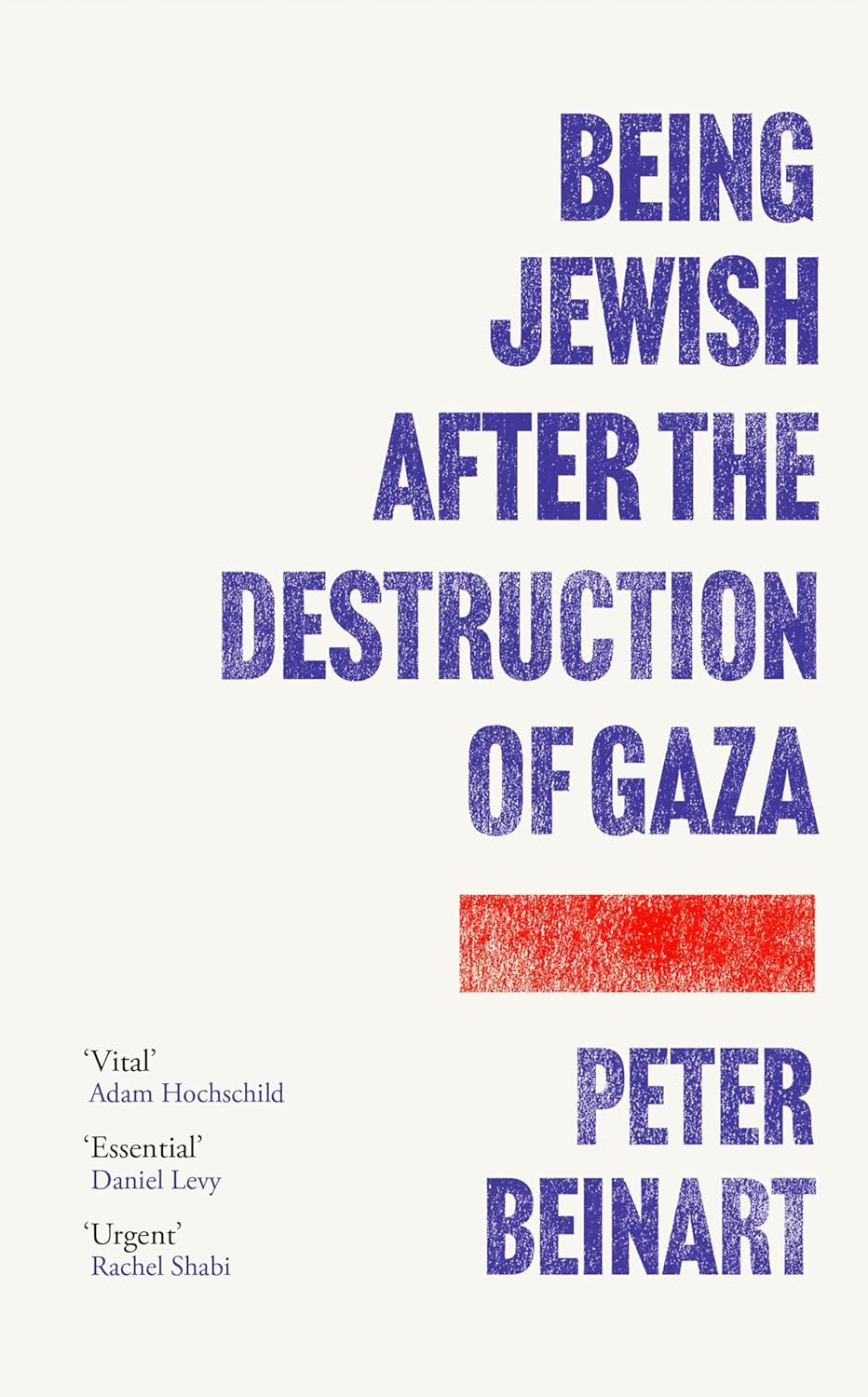
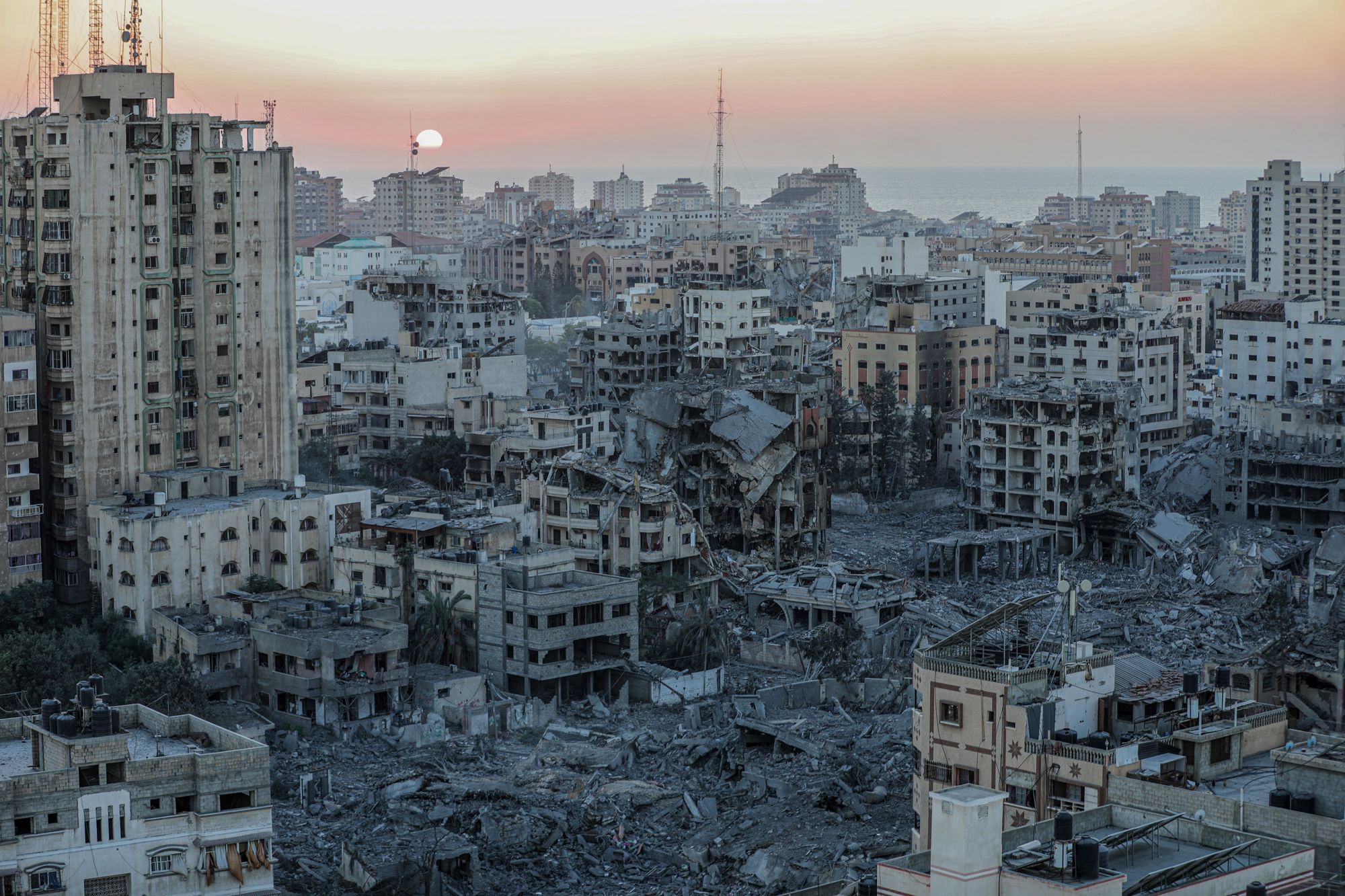
To say the horror of the last 18 months in Gaza is difficult to put into words would be an understatement. On the morning I’m writing this review, trauma surgeon Dr. Feroze Sidhwa and Jewish orthopedic surgeon Dr. Mark Perlmutter share their accounts of treating fatally wounded children having to tell their parents to pick them up in Nasser Hospital and, “take (them) over to the area where kids are allowed to die with their families, that’s a real thing in the emergency room here.“1 The death toll of gazan children stands at 17,400. At the time Beinart was writing Being Jewish, “At least 34 Palestinian children – more than an entire classroom – (were being) killed on average every single day since October 7th“. The killing of children, on this scale, in cold blood, is a unique afront to humanity. Beinarts sensitive, bold and passionate book is a call to uphold the dignity of human life above all else. I can confidently say Beinarts writing will challenge your misconceptions, enlighten gaps in your understanding and warm your heart with some desperately needed hope for a peaceful and just future. It certainly has for me.
Peter begins the book with ‘A Note to my Former Friend’ a heartwrenching personal appeal to a fellow Jew. Their disagreement is emblematic of the broader schism within the Jewish community Beinart says. Jews worldwide feel the pain of October 7th and the anger that flows from this anti-semitic attack. Beinart chose his title carefully however; Being Jewish after the destruction of Gaza, not Being Jewish after October 7th, specifically because, Beinart writes, “I know you grapple with the terror of that day. I worry that you don’t grapple sufficiently with the terror of the days that followed.”
Of course, the terror of Hamas’ attack on October 7th is not up for debate. It was infact not only on Shabbat but on the holy day of Shemini Atzeret followed by Simchat Torah in the US, usually a joyful occasion. Sickeningly, as many observant Jews abstain from using electronic devices during this time, many were struggling to access information about the attack, wondering which Israeli family members and friends were still alive, “I will never forget trying to dance, as is customary on Simchat Torah, while knowing that something horrifying had just happened, but not knowing exactly what.”
In the context of this attack it is crucial that anti-zionist and pro-palestinian voices do not stray into anti-semitic discourse. Slogans like ‘Resistance is justified when people are occupied’ when boldly stated after October 7th seem to allow no moral distinction between, “boycotting a product, initiating a protest, shooting a soldier, and killing a child.” To be anti-zionist or critical of Israel in various forms does not need to come at the expense of valuing Jewish people, religious or secular, and being sensitive to the trauma of historical persecution from the Russian Pograms to the Holocaust to the present day. And yet, the conflation between Jews and Israel is far too often made, with dire consequences. When ‘Free Palestine’ is painted on a synagogue rather than an Israel embassy it suggests Jewish people are coterminous with the Israeli state and responsible for its actions towards the Palestinians. Collective blame attributed to any group of people based on race, ethnicity or religion is the definition of racism, bigotry and dehumanisation.
It is this conflation between the Jewish people as an ethnic group, Judaism as a religion and cultural tradition, and the state of Israel that Beinart deftly deconstructs. In Beinarts view the dominant ideology amongst modern day Jews has been one of exceptionalism and perpetual victimhood which counter-intuitively undermines the humanity of Jewish people. Jewish exceptionalism and the idiolisation of a secular state practicing ethnic supremacy as the only means of protection for the Jewish people is antithetical to Jewish tradition which has never argued that the Jews are incapable of doing evil to other human beings.
“Worshipping a country that elevates Jews over Palestinians replaces Judaism’s universal God – who makes special demands on Jews but cherishes all people – with a tribal deity that considers Jewish life precious and Palestinian life cheap.”
Drawing on a long and rich history of Jewish intellectual thought that challenges the tenets of Zionism and the state of Israel as it has been constituted since 1948 and particularly since 1967, Beinart sees a democratic future for Israel/Palestine as the only possible solution, one which does not practice apartheid and regards Palestinian and Jewish liberation as a joint project. On the state itself Beinart writes,
“… we are ordered to accept a Jewish state’s “right to exist.” But the language is perverse. In Jewish tradition, states have no inherernt value. States are not created in the image of God; human beings are… The legitimacy of a Jewish state – like the holiness of the Jewish people – is conditional on how it behaves.”
In the name of Jewish safety Palestinians have been brutally dehumanised by Israeli leaders, leading the ICJ to conclude there is a plausible case for genocide. This dehumanisation is encapsulated well by Naftali Bennett forme Israeli Prime Minister, who when asked about Palestinian civilian deaths responded, “Are you seriously going to keep asking me about Palestinian civilians? What is wrong with you?… We’re fighting Nazis.” Are we supposed to conclude that 6-year old Hind Rijab was a Nazi while she was shot and killed in a car by the IDF, following the killings of her family members and the paramedics sent to save her?2 This dehumanisation is amoral and absurd. You would think that nobody, Jewish or otherwise, could turn a blind eye to this injustice and yet Beinart testifies to the callousness of some within the Jewish community, a callousness which may function as a psychological defensive mechanism given the possibly guilt inducing nature of charges of genocide made against Israel.
“During Vietnam, Rabbi Abraham Joshua Heschel said, “Whenever I open the prayer book I see before me images of children burning from napalm.” I suspect that’s what we fear: that if we put down our amulets and look Gaza in the eye, we’ll never get its images out of our head.”
It is easy as an outsider to say Jewish people should feel no guilt as they are not resonsible for the actions of Israel on account of their being Jewish; yet when the idea of Israel has become a consituent part of Jewish identity for many, this is easier said than done.
Another ambition that is easier said than done, is achieveing a political solution and a lasting peace. Beinart provides a compelling comparison to the cases of South Africa, the US and Ireland where political equality, peace and the ending of ethnic supremacy was similarly unfathomable, often for the same reasons. The belief that granting political freedom to your enemies comes at the price of your safety and security as a people is not new. Beinart highlights that, “A 1979 poll found that 84 percent of white South Africans believed “the physical safety of whites would be threatened by black government.” During the 1998 Good Friday agreement, “(Protestants) most famous leader, Ian Paisley, called it a ‘prelude to genocide’.” And finally, in the US, Historian Jason Sokol notes how the prospect of civil rights left whites fearing that, “if blacks gained rights, whites would correspondingly ‘wear the yoke’.”
And yet, in light of all this, we have more or less lasting domestic peace in the Unites States, South Africa and Ireland following political settlements which enfranchised the oppressed. As Beinart poingiantly argues, as evidenced by polling, that, “Palestinian support for violence goes up when Palestinian hopes of freedom go down,” and vice-versa. When oppressed people are given a viable political solution they would rather take this than risk the safety of their families in acts of violent resistance.
Given this fact, the genocide in Gaza must end, it only serves to bring more suffering and pain to Israelis in the long run, and of course to Palestinians. This is the moral test of our time, and as it stands we are as western governments on the wrong side of history supporting the Israeli state in it’s occupation and genocidal war. Jewish peace groups and individuals protesting across the US (being beated and detained by police for it, including Dartmouth former chair of the Jewish studies program) are on the right side. We should join them and amplify the Palestinian voices that can still cry out.
Further Reading
- The World After Gaza: A History (2025) – Pankaj Mishra
- Israel and Palestine: Reappraisals, Fevisions and Refutations (2009) – Avi Shlaim
- The Ethnic Cleansing of Palestine (2006) – Ilan Pappe
- Belonging: The Story of the Jews 1492-1900 (2013)- Simon Schama
- The Hundred Years’ War on Palestine (2020) – Rashid Khalidi
Footnotes
- Zeteo, Israel Almost Killed This US Doctor — US Embassy Says It’s Not Their ‘Role’ to Protect Him, URL: https://www.youtube.com/watch?v=BpuhOgXIkjI&ab_channel=Zeteo, Date Accessed (27/03/2025). ↩︎
- BBC News, Hind Rajab, 6, found dead in Gaza days after phone calls for help, URL: https://www.bbc.co.uk/news/world-middle-east-68261286, Date Accessed (27/03/2025). ↩︎
 WallerWrites - History, Music, Politics & Culture
Leave a comment